Arrhenatherum
| Arrhenatherum | |
|---|---|

| |
| Arrhenatherum elatius | |
Scientific classification 
| |
| Kingdom: | Plantae |
| Clade: | Tracheophytes |
| Clade: | Angiosperms |
| Clade: | Monocots |
| Clade: | Commelinids |
| Order: | Poales |
| Family: | Poaceae |
| Subfamily: | Pooideae |
| Supertribe: | Poodae |
| Tribe: | Poeae |
| Subtribe: | Aveninae |
| Genus: | Arrhenatherum P.Beauv. |
| Type species | |
| Arrhenatherum avenaceum ≡ Arrhenatherum elatius | |
| Synonyms[3] | |
| |
Arrhenatherum, commonly called oat-grass or button-grass, is a genus of Eurasian and North African plants in the grass family.[4][5][6][7]
Description
Wild forms can resemble wild oat (Avena) or fescue (Festuca). Oat-grasses are very common perennials with yellowish roots. The shining stems grow to a height of 1.80 m (6 ft),[8] but die off in winter. The leaves are hairless with blunt ligules. The inflorescence is a panicle with two-flowered bisexual spikelets.[9]
- Arrhenatherum album - tall oat-grass - Mediterranean from Portugal to Cyprus
- Arrhenatherum calderae - Tenerife in Canary Islands
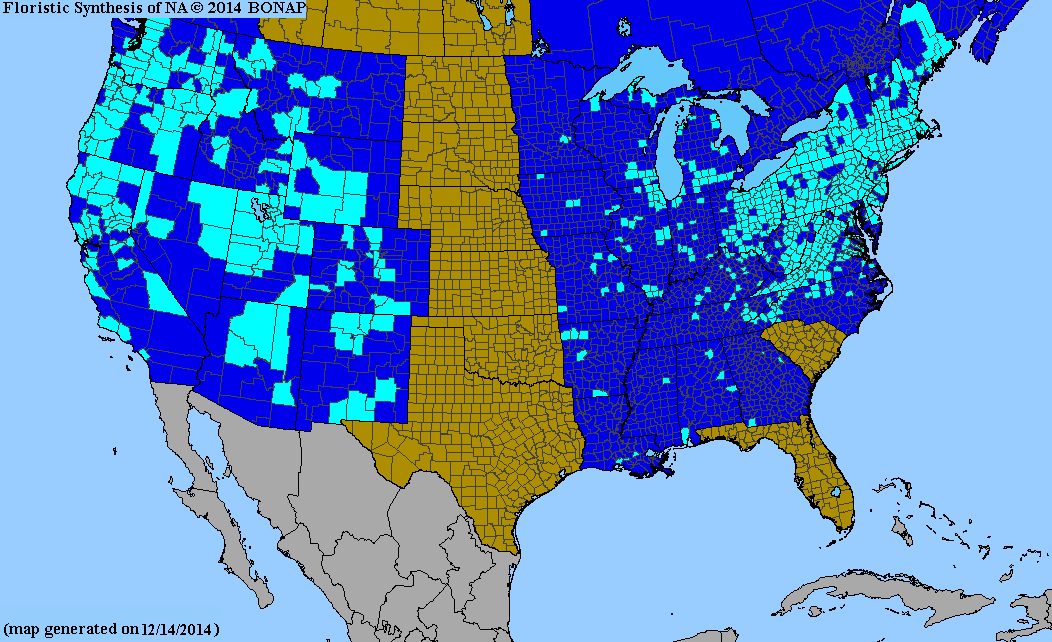
- Arrhenatherum elatius - false oat-grass, tall oat-grass, tall meadow oat - Eurasia + North Africa from Iceland to Canary Islands + Kazakhstan; naturalized in East Asia,[11] Australia,[12] New Zealand, the Americas[13][14]
- Arrhenatherum kotschyii - Turkey, Caucasus, Syria, Lebanon, Palestine, Jordan, Iraq, Iran, Afghanistan
- Arrhenatherum longifolium - France, Spain, Portugal, Morocco
- Arrhennatherum palaestinum - eastern Mediterranean from Greece to Iraq
- Arrhenatherum pallens - Portugal
- Formerly included
Numerous species are now considered better placed in other genera: Avenula, Danthoniastrum, Duthiea, Helictochloa, Helictotrichon and Sphenopholis.[15]
In culture
Arrhenatherum remains are found in northern European burials from the Iron Age but disappear after Christianisation. It has been argued that they are included in the Old Norse category of laukar ('leeks') and may have reflected the rebirth of the dead, or as protection during their journey to the afterlife.[16]
See also
- List of Poaceae genera
References
- ^ lectotype designated by L.K. Pfeiffer, Nom. 1: 274 (1872)
- ^ Tropicos, Arrhenatherum P. Beauv.
- ^ a b "World Checklist of Selected Plant Families: Royal Botanic Gardens, Kew".
- ^ Watson L, Dallwitz MJ. (2008). "The Grass Genera of the World: Arrhenatherum". The Grass Genera of the World. Retrieved 2009-08-19.
- ^ Palisot de Beauvois, Ambroise Marie François Joseph. 1812. Essai d'une Nouvelle Agrostographie 55-56 descriptions in Latin, commentary in French
- ^ Palisot de Beauvois, Ambroise Marie François Joseph. 1812. Essai d'une Nouvelle Agrostographie plate XI (11), figure V (5) at lower left line drawings of Arrhenatherum avenaceum
- ^ Altervista Flora Italiana genere Arrhenatherum
- ^ Streeter D, Hart-Davies C, Hardcastle A, Cole F, Harper L. 2009. Collins Flower Guide. Harper Collins ISBN 9-78-000718389-0
- ^ Valdes, B. & H. Scholz. 2006. The Euro+Med treatment of Gramineae - a generic synopsis and some new names. Willdenowia 36(2): 657–669
- ^ The Plant List search for Arrhenatherum
- ^ Flora of China Vol. 22 Page 322 燕麦草属 yan mai cao shu Arrhenatherum P. Beauvois
- ^ Atlas of Living Australia, Oatgrass, Arrhenatherum elatius (L.) P.Beauv. ex J.Presl & C.Presl
- ^ Biota of North America Program 2013 county distribution map
- ^ Rosengurtt, B., B. R. A. Maffei & P. I. Artucio. 1970. Gramíneas Uruguayas [i–vii], 1–489. Universidad de la República, Montevideo
- ^ "Search for 'Arrhenatherum'". Plants of the World Online. Royal Botanic Gardens, Kew. Retrieved 2026-04-29.
- ^ Heimdahl, Jens (2022). "Vad var laukr?". Fornvännen (in Swedish). 117 (4): 248–262.